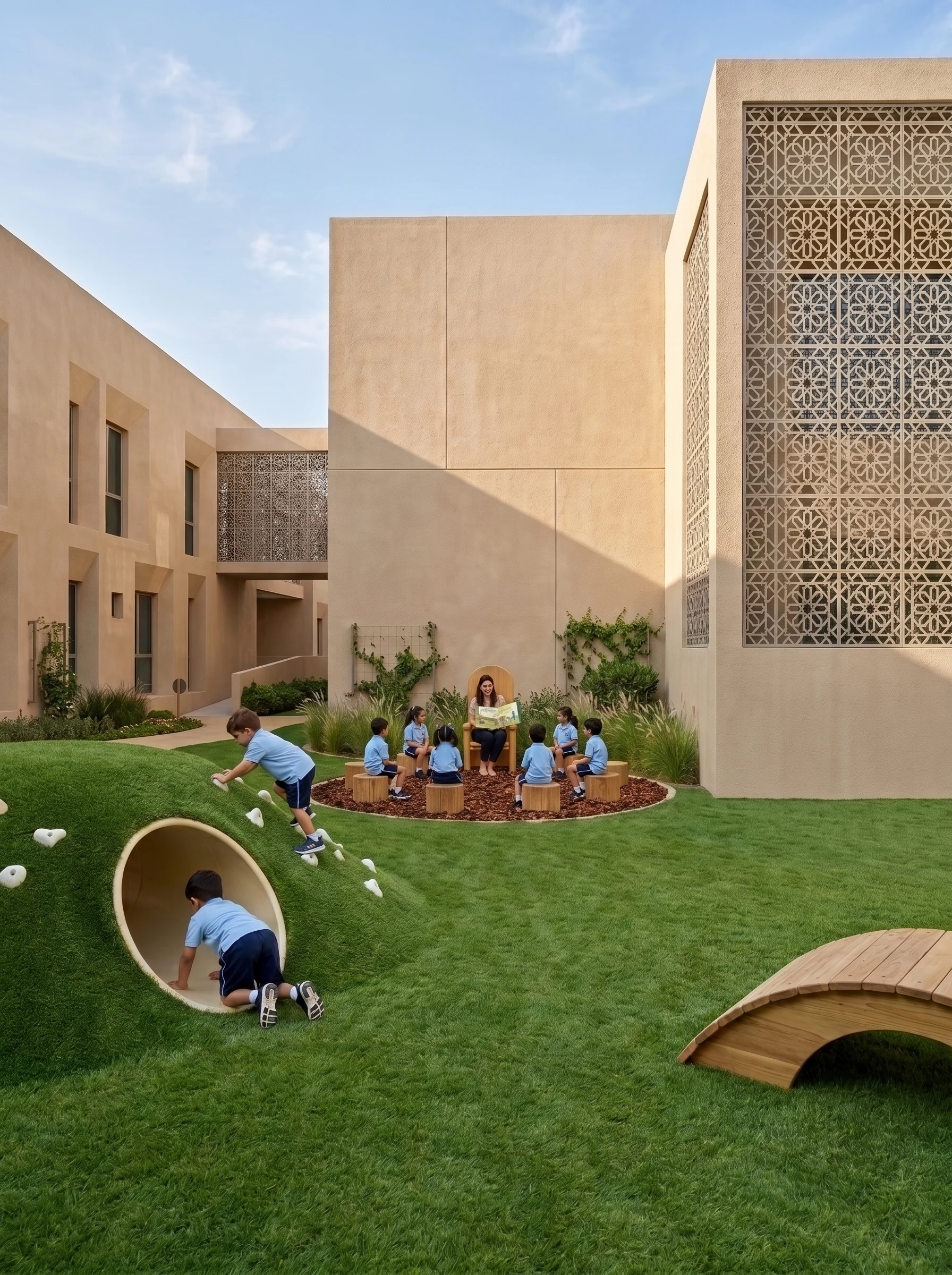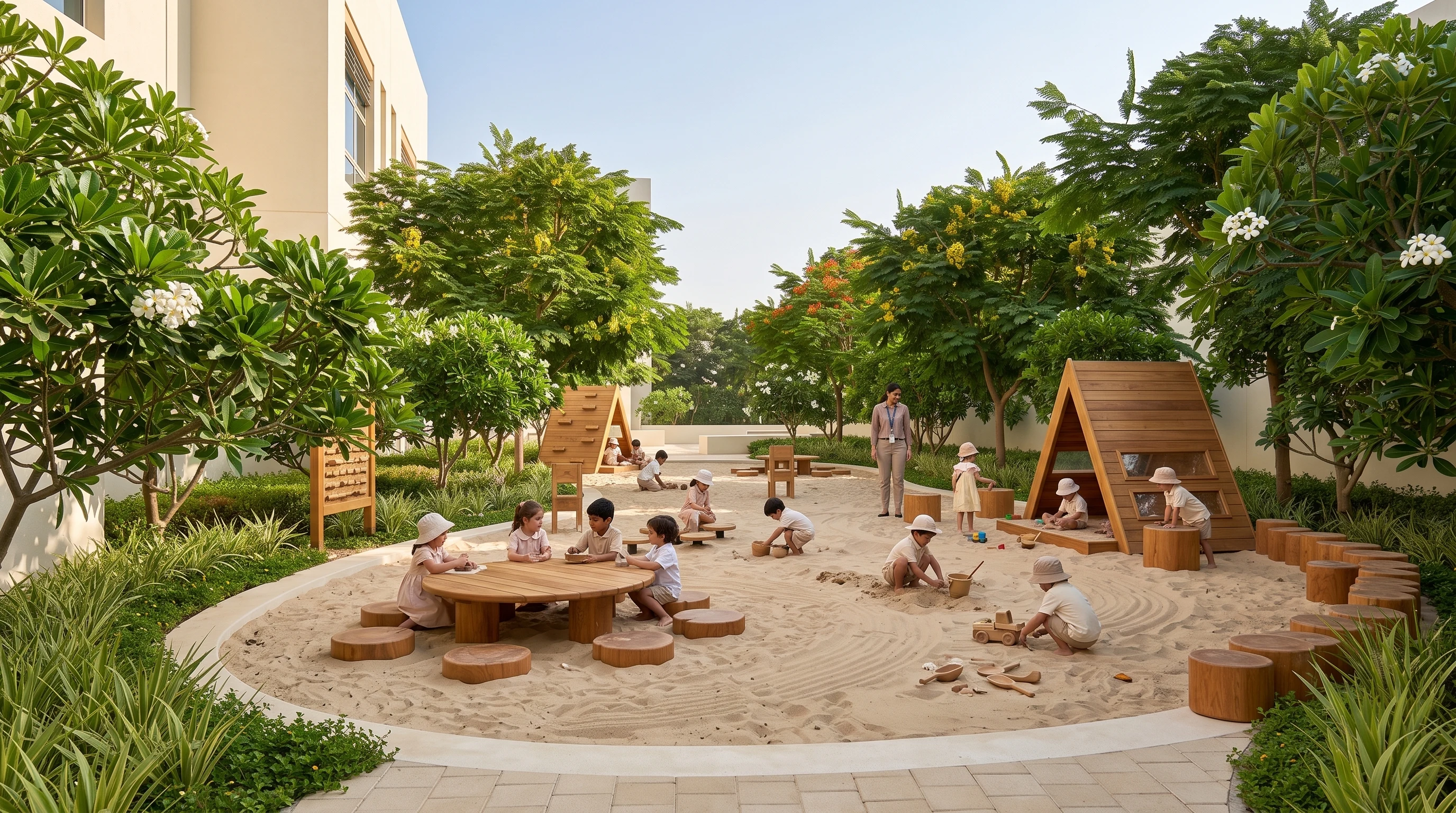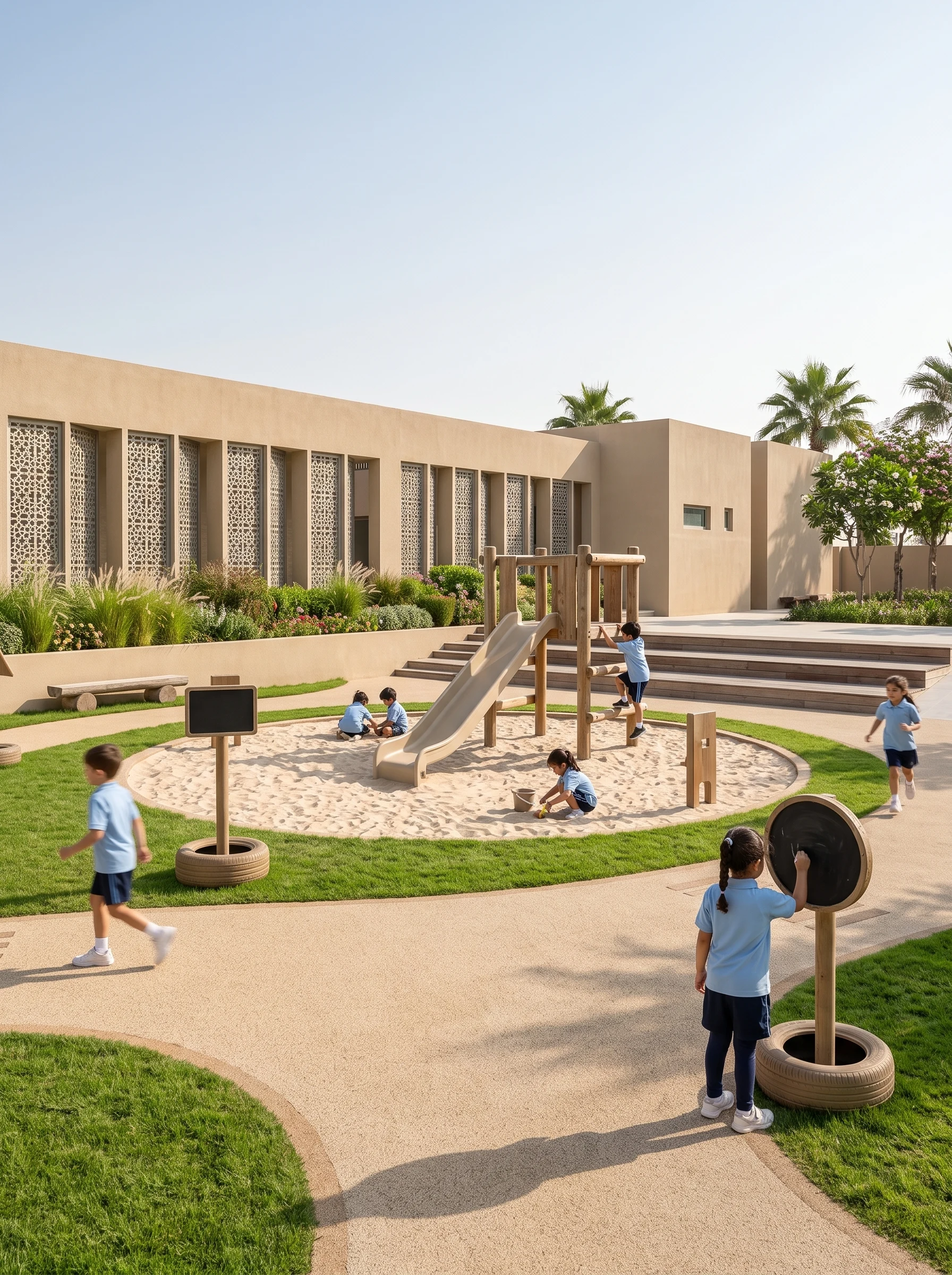
No two children interact with open space in identical ways. Some seek high-energy locomotive challenges—scrambling over timber balance logs, navigating cycle track corners, and racing across mounded lawns. Others gravitate toward tactile, quiet discovery—sifting sand, inspecting insect habitats, or weaving stories within small willow play structures.
Great landscape master planning makes space for both worlds without friction. By layering play zones into energetic, intermediate, and reflective tiers, campus spaces prevent sensory collisions and ensure every student finds their place.
Movement is crucial for cognitive development. When physical play equipment uses authentic tactile timbers, organic ropes, and irregular stone boulders rather than uniform plastic structures, children constantly calibrate their motor balance, develop spatial reasoning, and build lifelong motor confidence.