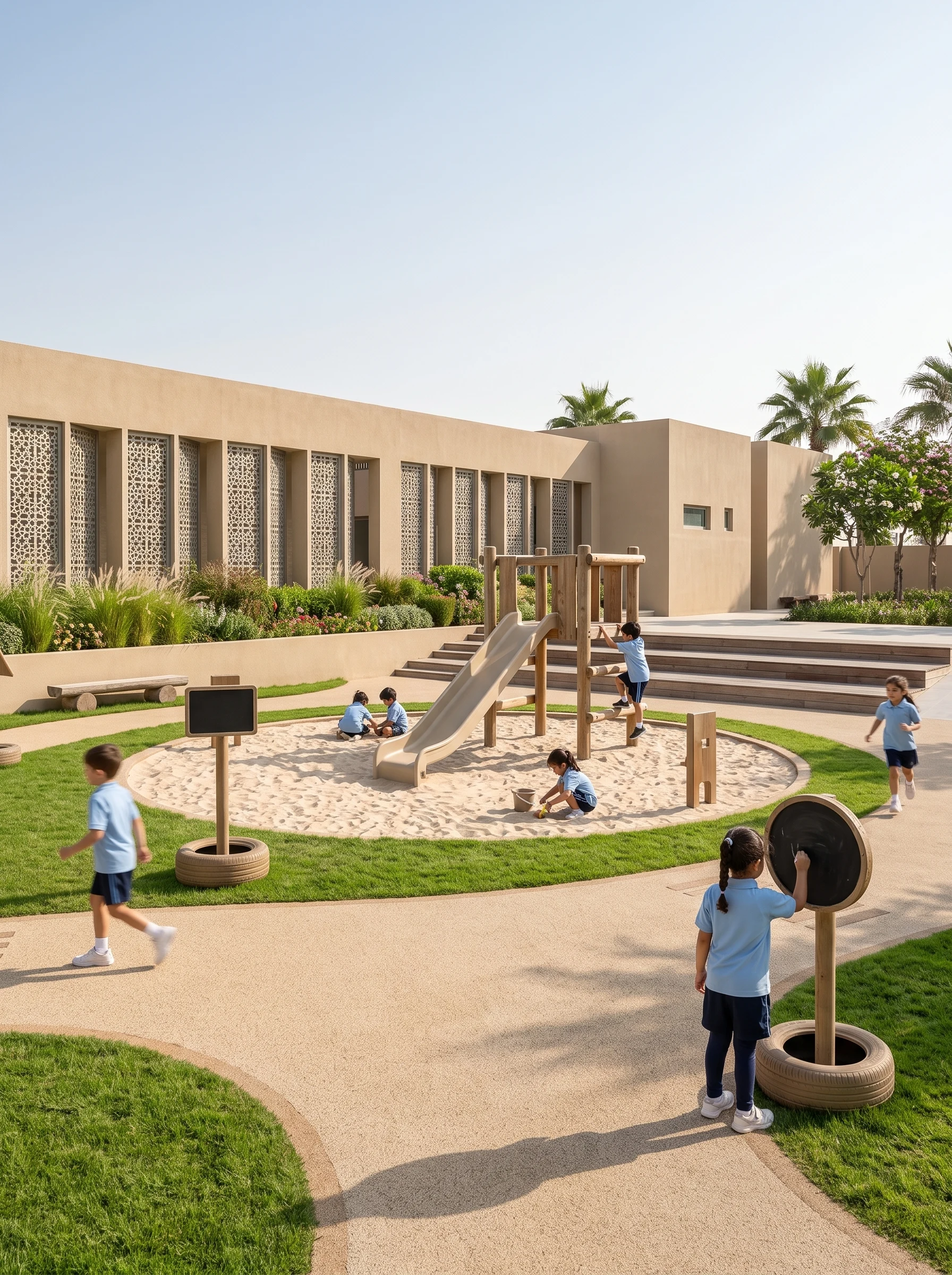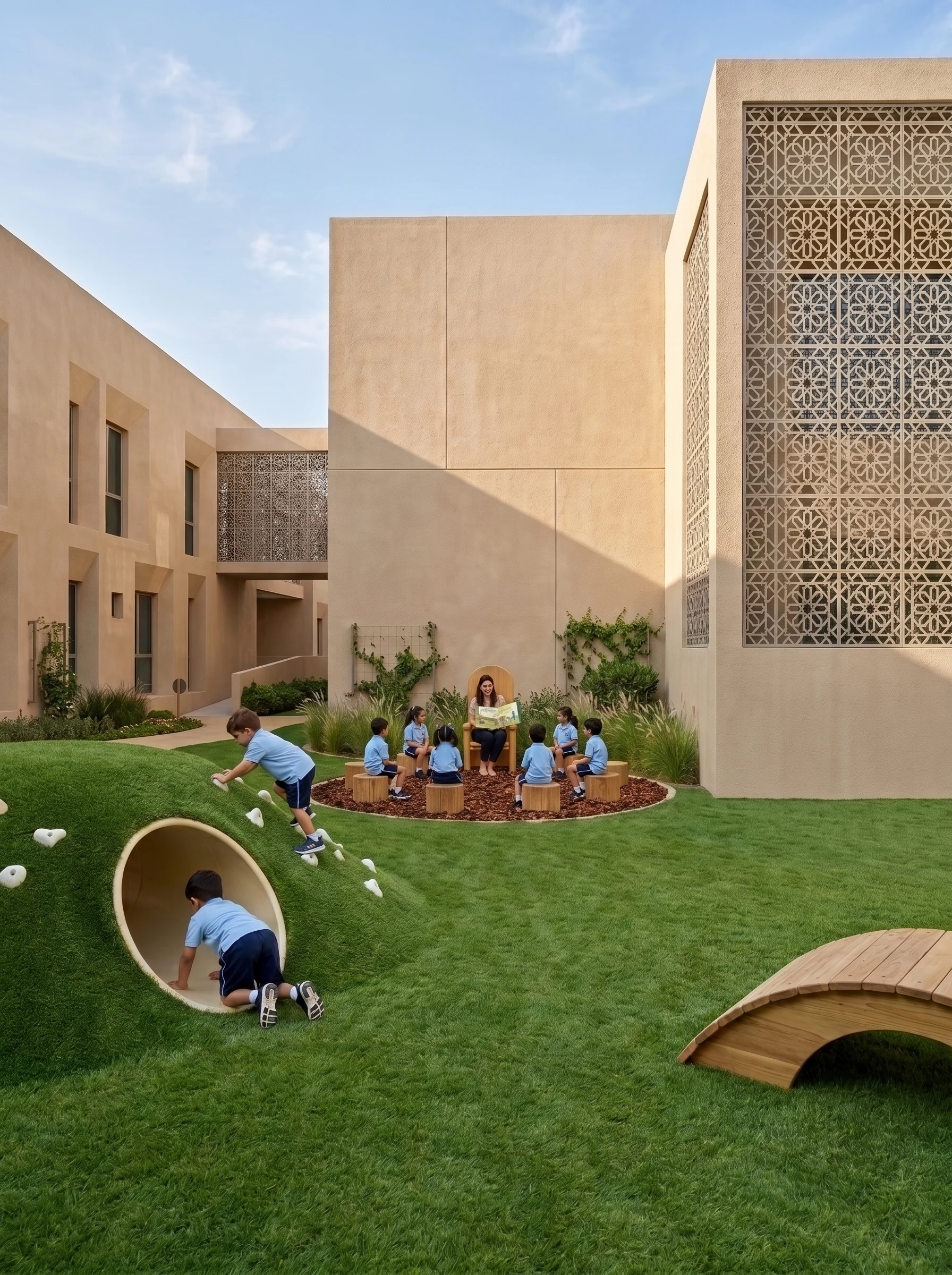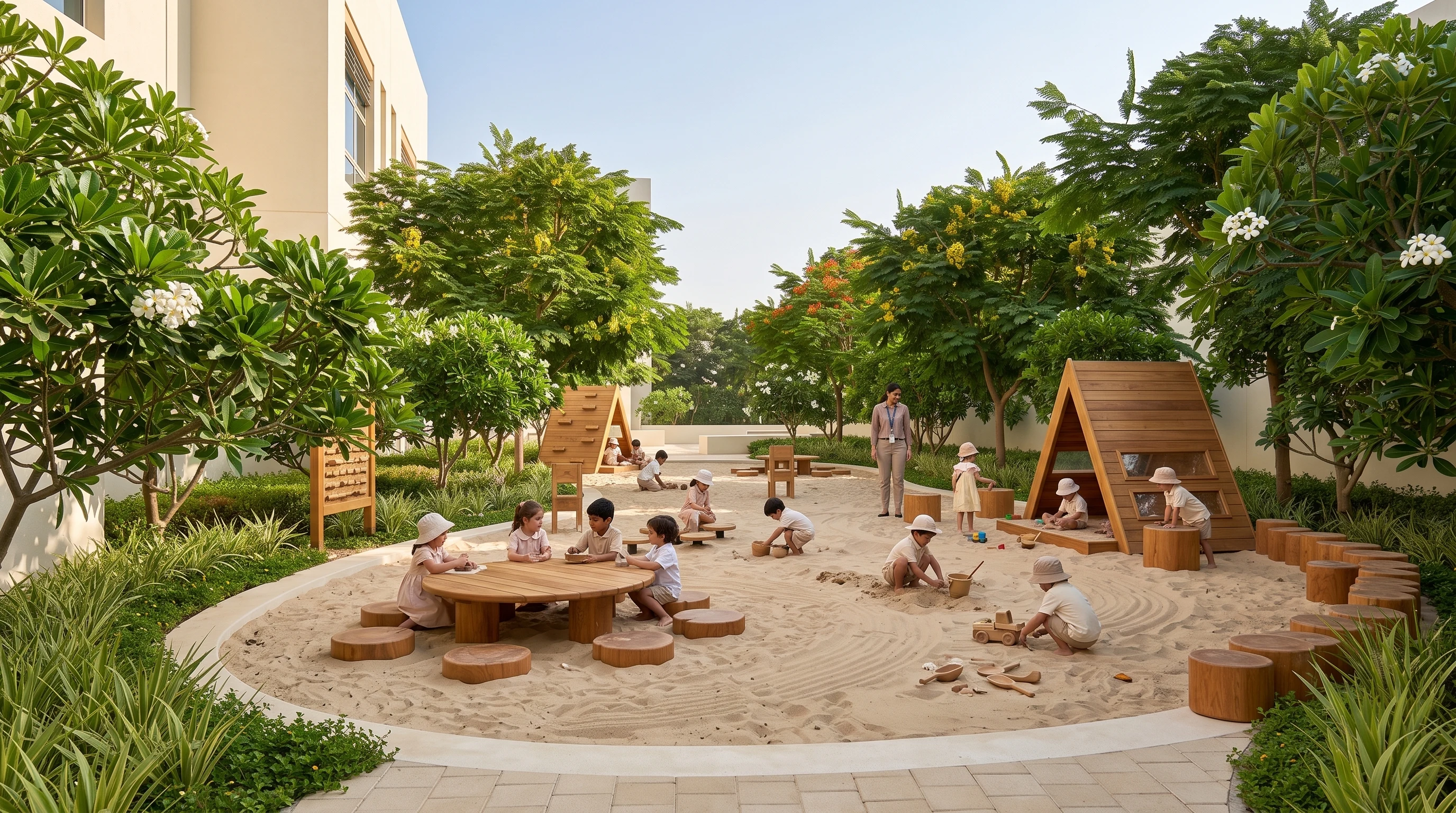
Outdoor learning is no longer considered an occasional departure from traditional teaching; it is a fundamental pillar of modern educational architecture. When children step into an environment thoughtfully designed with varied topographies, sensory planting, and natural obstacles, their perceptual boundaries expand.
Landscape design acts as a silent educator. Through spatial variety—quiet shaded nooks for contemplative reading, textured pathways for sensory grounding, and open communal clearings for collaborative problem-solving—schools can cultivate innate resilience and autonomy in early and primary learners.
"When we design landscapes for schools, we are not simply decorating outdoor plots—we are sculpting the sensory backdrop against which lifelong memories and developmental milestones unfold."
In our work across UAE campuses, from early childhood nurseries to expansive primary courtyards, integrating biophilic principles directly transforms everyday interactions. Children learn risk assessment by navigating gentle natural mounds, understand ecological cycles through native flora, and forge meaningful social connections away from screen-dominant indoor spaces.